AI Trust Crisis: How Robust Governance Frameworks Boost Consumer Confidence
- Bob Rapp

- 2 days ago
- 5 min read
The numbers tell a stark story: while 88% of organizations now use AI in at least one business function, only one-third have successfully scaled it across the enterprise. The primary culprit? Trust. Or rather, the profound lack of it.
This isn't just an enterprise problem: it's a consumer confidence crisis that threatens to stall AI's transformative potential. When organizations can't trust their own AI systems with sensitive data, how can consumers trust AI-powered products and services? The answer lies in robust governance frameworks that transform abstract ethical principles into concrete trust signals.
The Trust Deficit: Why Traditional Approaches Fail
Trust has emerged as the single greatest barrier to AI adoption in 2026. Despite significant technological advances, most organizations remain trapped in pilot purgatory, reluctant to entrust sensitive data and critical decisions to systems they don't fully understand or control.
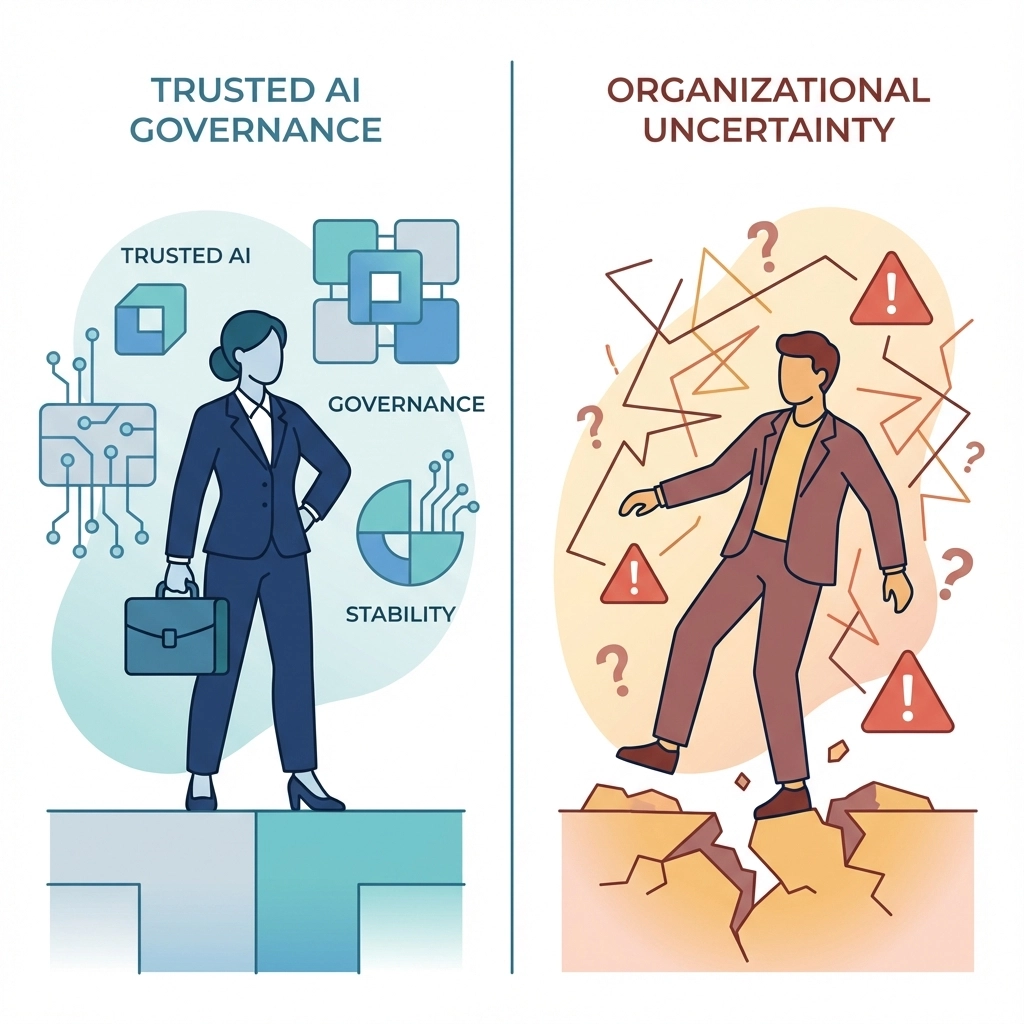
The reasons are clear: data breaches are routine, regulatory scrutiny is intensifying, and public trust in data handlers has never been more fragile. Traditional compliance programs, built for static systems and predictable risks, crumble under the dynamic complexity of AI operations.
Consider the challenges facing regulated industries like healthcare and financial services. Organizations routinely face audit failures when undocumented training data flows into validated systems. Model bias compromises clinical decisions. Security exposures lurk in third-party AI architectures. These aren't edge cases: they're the new operational reality.
The Governance Gap: Where Organizations Stumble
The fundamental problem isn't technological: it's operational. Most organizations approach AI governance as an afterthought, layering ethics policies on top of existing risk management frameworks never designed for algorithmic decision-making.
This creates several critical gaps:
Visibility Gaps: Organizations can't govern what they can't see. Many lack basic inventories of their AI systems, let alone understanding of how these systems make decisions or what data they consume.
Accountability Gaps: When AI systems fail or behave unexpectedly, responsibility becomes diffused across multiple teams and vendors. Clear lines of accountability disappear.
Response Gaps: Traditional incident response procedures assume human operators can quickly identify and remediate problems. AI failures often require specialized expertise and may cascade across multiple systems.
Assurance Gaps: Standard audit procedures don't account for model drift, data poisoning, or algorithmic bias. Organizations lack frameworks for continuous validation and monitoring.
Building Trust Through Systematic Governance
Robust governance frameworks address these gaps by establishing systematic approaches to AI risk management, transparency, and accountability. Rather than relying on good intentions, they create measurable trust signals that both internal stakeholders and consumers can verify.
Trust Signals That Matter
Effective governance frameworks generate specific trust signals that build consumer confidence:
Model Cards and Documentation: Clear, accessible explanations of how AI systems work, what data they use, and what limitations they have. This transparency helps consumers make informed decisions about AI-powered products.
Algorithmic Impact Assessments: Systematic evaluations of how AI systems might affect different user groups, with mitigation strategies for identified risks. This demonstrates proactive risk management rather than reactive damage control.
Third-Party Audits and Certifications: Independent validation of AI systems and governance processes, providing external verification of internal claims about safety and fairness.
Public Reporting: Regular disclosure of AI system performance, including metrics on accuracy, fairness, and safety incidents. This creates accountability and demonstrates ongoing commitment to responsible AI.

Transparency as a Competitive Advantage
Organizations that embrace transparency often discover it becomes a competitive differentiator. When consumers can clearly understand how AI systems work and what safeguards exist, they're more likely to trust and adopt AI-powered products.
This requires moving beyond generic privacy policies and terms of service toward specific, actionable information about AI governance. Successful organizations publish detailed AI principles, share algorithmic audit results, and provide clear channels for users to understand and challenge AI-driven decisions.
Incident Response: When Things Go Wrong
Even the best governance frameworks can't prevent every AI failure. What distinguishes trustworthy organizations is how they respond when problems occur.
Effective AI incident response requires specialized capabilities:
Rapid Detection: Automated monitoring systems that can identify anomalous AI behavior before it impacts users or customers.
Expert Response Teams: Cross-functional teams with both technical AI expertise and business context to quickly assess and address AI-related incidents.
Stakeholder Communication: Clear, honest communication protocols that explain what happened, what impact it had, and what steps are being taken to prevent recurrence.
Learning Integration: Systematic processes for incorporating incident learnings into governance frameworks and AI system improvements.
Organizations that handle AI incidents transparently and effectively often see their consumer trust increase rather than decrease. Consumers appreciate honesty and competence more than perfection.

Assurance and Continuous Monitoring
Static governance frameworks fail in dynamic AI environments. Effective frameworks include continuous monitoring and adaptation capabilities that provide ongoing assurance of AI system performance and safety.
This includes:
Model Performance Monitoring: Continuous tracking of AI system accuracy, fairness, and other key metrics, with automated alerts when performance degrades.
Data Quality Assurance: Ongoing validation of training and operational data to detect issues like data drift, contamination, or bias.
Governance Process Audits: Regular reviews of governance processes themselves to ensure they remain effective as AI systems and business contexts evolve.
Stakeholder Feedback Integration: Systematic collection and analysis of feedback from users, customers, and other stakeholders to identify emerging trust concerns.
Real-World Examples: Governance in Action
Several organizations demonstrate how robust governance frameworks translate into measurable trust benefits:
Healthcare AI Provider: A medical AI company implemented comprehensive model cards for all its diagnostic tools, third-party fairness audits, and public reporting of performance metrics across different patient populations. Patient surveys showed significantly higher trust levels compared to competitors without transparent governance.
Financial Services Firm: A bank established an AI ethics board with external experts, published detailed algorithmic impact assessments for its lending algorithms, and created a customer ombudsman specifically for AI-related concerns. Customer complaints related to AI decisions decreased by more than half.
Technology Platform: A social media platform introduced mandatory algorithmic audits, user-accessible explanations of recommendation systems, and quarterly transparency reports on AI system performance. User engagement with AI-powered features increased substantially.
Measuring Trust: Practical Metrics
Organizations serious about building consumer confidence need concrete ways to measure progress. Effective metrics include:
Direct Trust Measures: Regular consumer surveys measuring trust in AI-powered products and services, with specific questions about governance and transparency.
Behavioral Indicators: Usage patterns, feature adoption rates, and customer retention metrics for AI-powered products.
Incident Metrics: Frequency and severity of AI-related incidents, time to resolution, and customer satisfaction with incident response.
Transparency Metrics: Engagement with published transparency reports, model cards, and other governance documentation.

The Path Forward: Actionable Steps
Building consumer trust through governance isn't a one-time project: it's an ongoing capability that requires systematic investment and attention. Organizations can start by:
Conducting AI Inventory: Document all AI systems, their purposes, data sources, and potential risks. You can't govern what you don't know about.
Establishing Clear Accountability: Assign specific individuals and teams responsibility for AI governance, with clear escalation paths and decision-making authority.
Creating Transparency Artifacts: Develop model cards, algorithmic impact assessments, and other documentation that makes AI systems understandable to non-technical stakeholders.
Implementing Monitoring Systems: Deploy automated monitoring for AI system performance, fairness, and safety, with clear thresholds for intervention.
Building Response Capabilities: Develop specialized incident response procedures for AI-related issues, with cross-functional teams and clear communication protocols.
While the specific impact of governance on consumer confidence varies by industry and implementation, the directional effect is clear: organizations with robust, transparent AI governance frameworks consistently outperform their peers in trust metrics and customer satisfaction.
The AI trust crisis is real, but it's not insurmountable. Organizations that invest in systematic governance frameworks: with concrete trust signals, transparent operations, effective incident response, and continuous assurance: can transform this crisis into a competitive advantage. The question isn't whether governance affects consumer confidence, but whether your organization will lead or follow in building the trust infrastructure that AI adoption requires.
This post was created by Bob Rapp, Founder aigovops foundation 2025 all rights reserved. Join our email list at https://www.aigovopsfoundation.org/ and help build a global community doing good for humans with ai - and making the world a better place to ship production ai solutions
Comments