Chief Risk Officer AI Governance Checklist (2026): 30 Questions to Ask Before You Approve Any Model
- Bob Rapp

- 7 days ago
- 5 min read
As Chief Risk Officer, you're facing an unprecedented challenge: how do you govern AI systems that evolve faster than traditional risk frameworks can adapt? With the EU AI Act enforcement ramping up and NIST AI Risk Management Framework becoming the global standard, the stakes have never been higher.
The reality is stark. Organizations deploying AI without robust governance face regulatory penalties, operational failures, and reputational damage that can take years to recover from. Yet most CROs are still relying on outdated checklists designed for static systems, not dynamic AI models that learn and change over time.
This comprehensive checklist provides 30 critical questions every CRO must ask before approving any AI model for deployment. Each question maps directly to regulatory requirements and industry best practices, giving you the confidence to make informed risk decisions.
Regulatory Compliance & Legal Foundation
The regulatory landscape for AI is no longer emerging: it's here. Start with these foundational questions to ensure your organization meets current and upcoming compliance requirements.
1. What laws and regulations apply based on our region and industry? Map all applicable regulations including EU AI Act, GDPR, sector-specific requirements (healthcare, financial services, etc.), and emerging state-level AI laws.
2. Does this model fall under high-risk classifications? High-risk systems under the EU AI Act include those used in critical infrastructure, employment decisions, law enforcement, education, and migration management.
3. Have we completed required conformity assessment procedures for high-risk systems? Document all conformity assessments, CE marking requirements, and third-party audits where applicable.
4. Is technical documentation maintained throughout the AI lifecycle? Ensure comprehensive documentation exists from development through deployment and ongoing monitoring.
5. Do we have post-market monitoring and reporting capabilities established? Implement systems to detect issues post-deployment and report incidents to relevant authorities.
Risk Identification & Classification
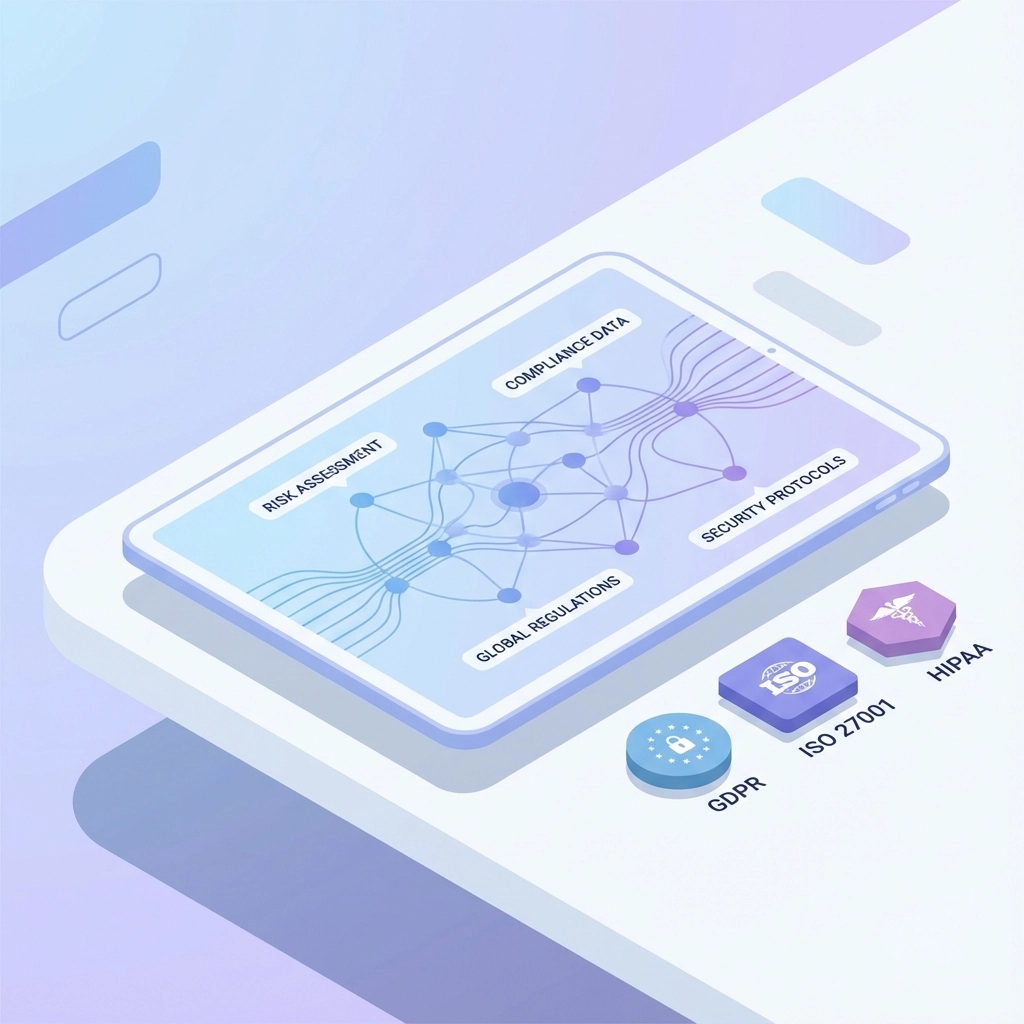
Understanding your AI risk profile requires systematic assessment using established frameworks. These questions align with NIST AI RMF principles for effective risk categorization.
6. Have we conducted a proper AI inventory to catalog existing models? Maintain a comprehensive registry of all AI systems, their purposes, and current deployment status.
7. What risk category does this model fall into using NIST AI Risk Management Framework? Apply NIST's risk categorization methodology to determine appropriate governance controls.
8. What specific risks does this model present? Identify potential bias, drift, privacy violations, safety concerns, and operational impact risks.
9. Have we used qualitative risk assessment tools? Employ risk matrices to evaluate likelihood and impact of identified risks.
10. For high-impact models, have we applied quantitative risk techniques? Use Monte Carlo simulations, Value at Risk calculations, and other quantitative methods for critical systems.
Data Governance & Lineage
Data is the foundation of AI model behavior. Poor data governance leads to poor model performance and increased risk exposure.
11. What data categories will this model access, and are they appropriately classified? Ensure data classification aligns with sensitivity levels and access requirements.
12. Do we understand data lineage and movement throughout the AI pipeline? Map data flows from source to model to output, identifying potential vulnerabilities.
13. Have we established data quality, lineage, and privacy controls? Implement controls throughout the pipeline to maintain data integrity and compliance.
14. Which data requires restricted permissions or strict boundaries? Define and enforce data access controls based on sensitivity and regulatory requirements.
15. Are data retention and deletion policies clearly defined? Establish clear policies for data lifecycle management in AI systems.
Model Development & Testing
Risk-aware development practices must be embedded from the beginning of the model lifecycle, not bolted on at the end.
16. Have development teams operated with risk-aware practices from inception? Ensure data science and engineering teams integrate risk considerations throughout development.
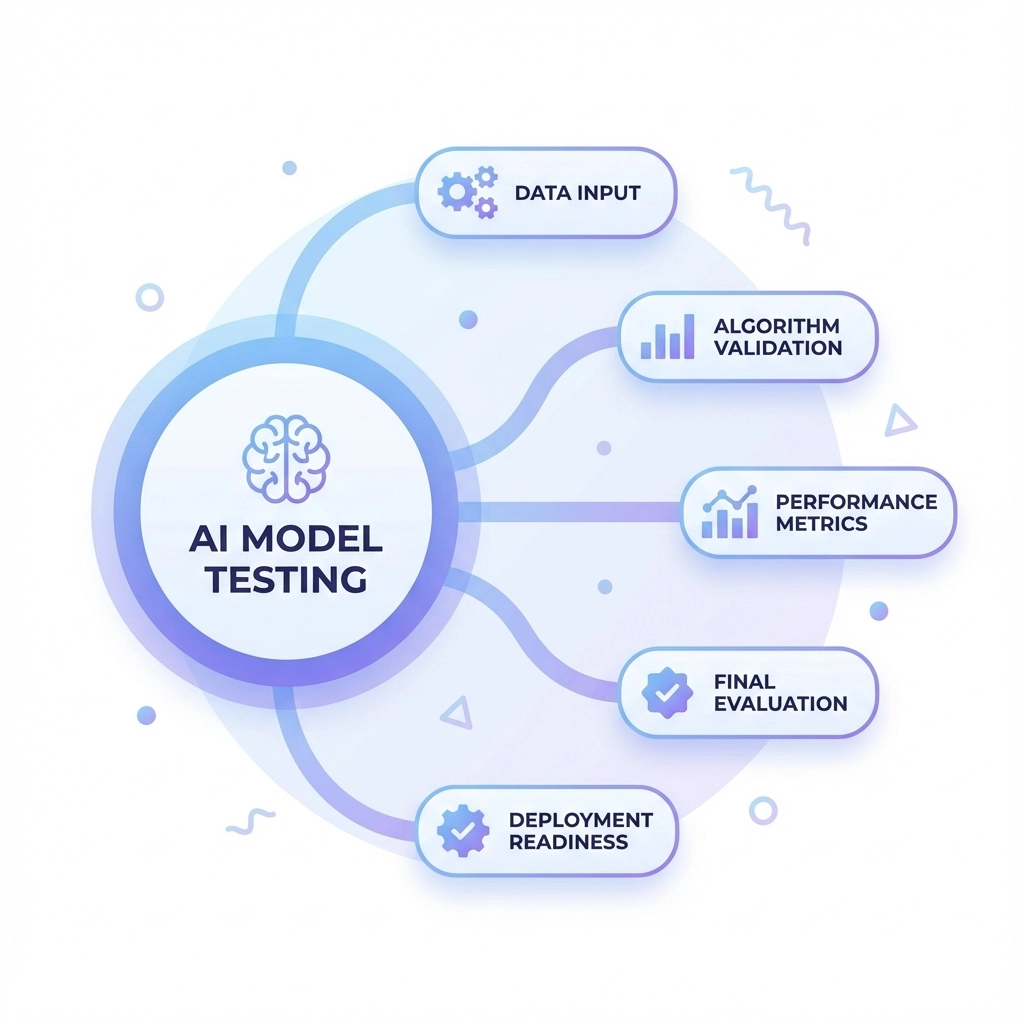
17. Has the model undergone extensive testing appropriate to its risk level? Scale testing rigor based on model risk classification and potential impact.
18. Have we tested for bias and fairness issues across relevant demographics? Conduct comprehensive bias testing across protected classes and relevant population segments.
19. What validation procedures confirm model performance meets requirements? Document validation methodologies and performance benchmarks.
20. Are model limitations and failure modes clearly documented? Identify and document known limitations, edge cases, and potential failure scenarios.
Human Oversight & Accountability
Effective AI governance requires clear human accountability and appropriate oversight mechanisms for different risk levels.
21. What human oversight mechanisms are in place? Define human-in-the-loop, human-on-the-loop, or human-out-of-the-loop approaches based on risk level.
22. Who has clear accountability for AI outcomes? Establish unambiguous ownership and decision-making authority for AI system outcomes.
23. Have we defined roles and responsibilities across the governance structure? Create clear governance roles from development through operation and monitoring.
24. What escalation procedures exist for monitoring alerts? Define clear escalation paths for different types of alerts and their severity levels.
25. Are override capabilities available when needed? Ensure human operators can override AI decisions when circumstances require intervention.
Monitoring & Continuous Assessment
Modern AI governance must be telemetry-driven rather than checklist-driven, with continuous monitoring replacing periodic assessments.
26. Is monitoring telemetry-driven and automated? Implement real-time monitoring systems that provide continuous visibility into model behavior.
27. Do we monitor for drift, bias, leakage, and abnormal patterns? Deploy comprehensive monitoring for technical drift, performance degradation, and security concerns.
28. Does automated risk scoring replace static assessments? Use dynamic risk scoring that adapts to changing model behavior and operational context.
29. What are acceptable error thresholds for this model's operational role? Define clear performance thresholds for financial workflows, operational decisions, and customer interactions.
30. How quickly can we detect and respond to model failures? Establish target detection and response times based on model criticality and potential impact.
Sample Risk Appetite Statements
Every organization needs clear risk appetite statements tailored to their AI use cases. Here are examples to adapt:
For Customer-Facing AI Systems: "We accept up to 5% false positive rate in fraud detection models, provided false negative rates remain below 1%, with human review required for all decisions above $10,000 impact."
For Operational AI Systems: "We tolerate model performance degradation up to 10% from baseline before triggering automatic rollback, with mandatory human review for any system affecting critical infrastructure."
For HR and Employment Systems: "Zero tolerance for discriminatory bias above statistical significance thresholds, with monthly bias audits and immediate remediation requirements."
NIST AI RMF Integration
Map your governance processes to NIST AI Risk Management Framework functions:
Govern: Establish organizational AI governance structure and policies
Map: Identify and categorize AI risks in context
Measure: Quantify identified risks using appropriate metrics
Manage: Develop and implement risk response strategies
Implementation Priorities
Start with high-risk systems and work systematically through your AI portfolio. Establish clear risk categorization criteria with corresponding control requirements. High-risk systems demand rigorous controls, while lower-risk applications may proceed with streamlined oversight.
Remember: policies must be living documents that evolve based on monitoring results and emerging threats. Integrate AI governance into existing enterprise risk and compliance functions rather than treating it as a separate compliance exercise.
Ready to implement robust AI governance that meets regulatory requirements while enabling innovation? Schedule a demo to see how AI Gov Ops can streamline your governance processes and provide the visibility CROs need to make confident risk decisions.
This post was created by Bob Rapp, Founder aigovops foundation 2025 all rights reserved. Join our email list at https://www.aigovopsfoundation.org/ and help build a global community doing good for humans with ai - and making the world a better place to ship production ai solutions
This post was created by Bob Rapp, Founder aigovops foundation 2025 all rights reserved. Join our email list at https://www.aigovopsfoundation.org/ and help build a global community doing good for humans with ai - and making the world a better place to ship production ai solutions
Comments