EU AI Act Compliance: 7 Mistakes You're Making with Implementation (and How to Fix Them)
- Bob Rapp

- 2 days ago
- 6 min read
The EU AI Act is now in effect, and organizations worldwide are scrambling to understand their obligations. With penalties reaching 7% of global turnover or €35 million: exceeding even GDPR fines: getting compliance wrong isn't an option.
Yet across industries, we're seeing the same implementation mistakes repeated. Companies that seemed prepared are discovering gaps in their approach, while others are paralyzed by the complexity. The August 2025 enforcement deadline is approaching fast, and the margin for error is shrinking.
Here are the seven most critical mistakes organizations make with EU AI Act implementation: and the practical steps to fix them before it's too late.
Mistake #1: Misclassifying AI System Roles and Risk Categories
The Problem: Organizations incorrectly categorize their AI systems' risk levels and their own roles as providers versus deployers. This fundamental misunderstanding leads to inadequate compliance measures and potential regulatory exposure.
Many companies assume they're simply "users" of AI systems when they may actually qualify as providers under the Act's definitions. Others underestimate the risk classification of their AI applications, particularly in sectors like healthcare, finance, and employment.
How to Fix It:
Conduct a comprehensive mapping of all AI systems in your organization
Assess each system against the Act's risk categories: minimal risk, limited risk, high-risk, and unacceptable risk
Determine your role for each system: Are you developing, substantially modifying, or merely deploying?
Document your rationale for each classification decision
Review classifications quarterly as systems evolve
For organizations managing multiple AI initiatives, developing a systematic approach to role and risk assessment becomes critical for maintaining compliance at scale.

Mistake #2: Ignoring When Modifications Trigger Provider Status
The Problem: Companies building custom solutions around general-purpose AI models often don't realize that substantial modifications can reclassify them as "providers," dramatically increasing their compliance obligations.
The definition of "substantial modification" remains somewhat ambiguous, but any changes that alter the AI system's intended purpose, risk profile, or fundamental behavior likely qualify. This includes fine-tuning, adding new capabilities, or changing the model's application domain.
How to Fix It:
Establish clear criteria for what constitutes substantial modification in your context
Document all modifications made to existing AI systems
Assess whether modifications change the system's risk classification or intended use
If modifications trigger provider status, ensure you can meet technical documentation, risk management, and quality management system requirements
Maintain detailed records of modification rationale and impact assessments
Organizations should treat any modification that could potentially shift provider obligations as a compliance trigger requiring formal review.
Mistake #3: Misunderstanding the August 2025 GPAI Provider Deadline
The Problem: Businesses deploying general-purpose AI solutions are uncertain whether the August 2, 2025 deadline applies to them, especially if they're not substantially modifying the core model.
This confusion stems from the complex relationship between GPAI model providers, downstream providers, and deployers. Companies integrating existing models often assume they're exempt from provider obligations, while those making minor customizations may not realize they've crossed the threshold.
How to Fix It:
Clarify your specific role in the AI value chain for each GPAI implementation
Understand compute thresholds that automatically trigger provider obligations (10²⁵ FLOPs for training)
Assess whether your modifications affect the model's general-purpose nature
If you qualify as a GPAI provider, prepare for systemic risk evaluation requirements
Establish clear documentation showing your relationship to the underlying model
The enforcement grace period extends to August 2026 for GPAI models, but preparation should begin immediately given the complexity of compliance requirements.
Mistake #4: Skipping Mandatory Risk and Impact Assessments
The Problem: Companies proceed with AI implementations without conducting required conformity assessments and fundamental rights impact assessments, particularly for high-risk systems.
These assessments aren't optional checkboxes: they're mandatory compliance requirements that must be completed before deploying high-risk AI systems. Organizations often underestimate the depth and rigor required for these evaluations.
How to Fix It:
Implement mandatory assessment processes before any high-risk AI deployment
Ensure assessments cover technical performance, fundamental rights impact, and risk mitigation measures
Document assessment methodologies and findings comprehensively
Establish regular review cycles for ongoing systems
Train assessment teams on EU AI Act requirements and evaluation criteria
Effective assessment processes require cross-functional collaboration between technical teams, legal counsel, and business stakeholders to ensure comprehensive evaluation.
Mistake #5: Failing to Secure Vendor Transparency and Documentation
The Problem: Organizations lack clear contractual obligations with AI vendors and struggle to obtain required technical documentation, making conformity assessments nearly impossible.
Vendors may be reluctant to share detailed technical information, training data summaries, or compliance documentation. Without this information, downstream organizations cannot fulfill their own compliance obligations or conduct meaningful risk assessments.
How to Fix It:
Negotiate comprehensive AI clauses in vendor contracts before procurement
Specify exact documentation requirements, including technical specifications, training data information, and risk assessments
Establish clear compliance responsibilities and liability allocation
Require vendors to maintain current CE marking and declaration of conformity
Include audit rights and compliance monitoring provisions
Plan for vendor transitions if compliance requirements cannot be met
Successful vendor management requires proactive contract negotiation rather than retroactive compliance requests.
Mistake #6: Overlooking Employment-Related AI Restrictions
The Problem: Employers implementing AI in recruitment, hiring, and worker management often don't recognize these applications fall under high-risk classifications requiring enhanced compliance measures.
The EU AI Act specifically identifies AI systems used for recruitment, worker evaluation, promotion decisions, and task allocation as high-risk applications. Organizations may implement these tools without realizing they've entered a heavily regulated category.
How to Fix It:
Audit all AI applications in HR and workforce management
Implement transparency requirements for employment-related AI decisions
Establish human oversight and intervention capabilities
Provide clear information to affected workers about AI system use
Implement accuracy, robustness, and bias monitoring for employment AI
Consider data subject rights and worker consultation requirements
Employment AI compliance extends beyond technical requirements to include worker rights and organizational transparency obligations.
Mistake #7: Waiting for Complete Guidance Before Acting
The Problem: Companies assume they can wait for final standards and implementation guidance before beginning compliance efforts, but enforcement deadlines are arriving before key standards are completed.
While the European Commission and standardization bodies are still developing detailed implementation guidance, basic compliance obligations are already in effect. Organizations waiting for complete clarity risk missing critical deadlines.
How to Fix It:
Begin compliance efforts using currently available guidance from the AI Office and European Commission
Develop internal frameworks that can adapt as official standards emerge
Participate in industry working groups and pilot programs to stay informed
Establish compliance monitoring systems that can evolve with emerging guidance
Plan for iterative compliance improvement rather than one-time implementation
Organizations with mature governance frameworks can more easily adapt to evolving requirements than those starting from zero.
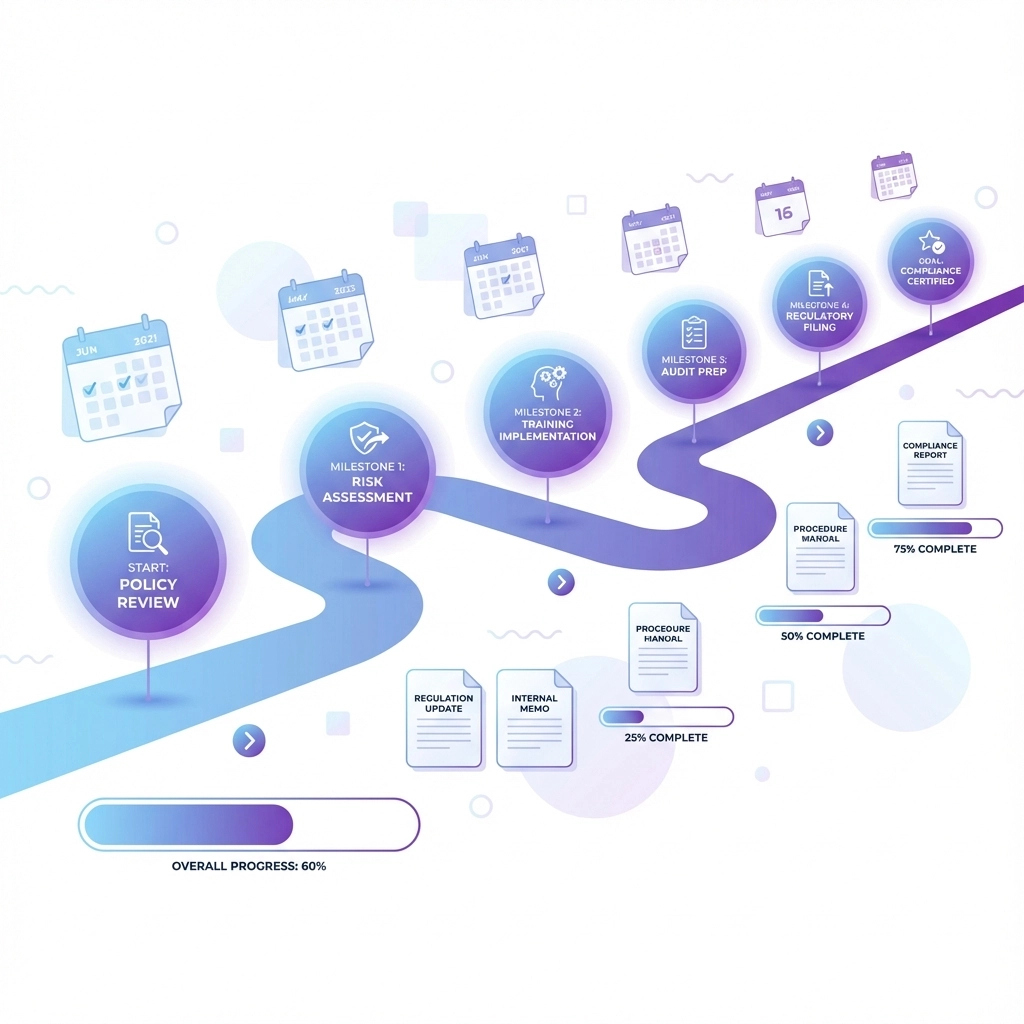
Implementation Checklist: Your Next Steps
Immediate Actions (Next 30 Days):
Complete AI system inventory across your organization
Classify each system by risk category and your provider/deployer role
Review existing vendor contracts for AI-related compliance gaps
Identify any employment-related AI applications requiring immediate attention
Short-term Goals (Next 90 Days):
Conduct risk and impact assessments for all high-risk systems
Establish documentation requirements and collection processes
Develop internal compliance monitoring procedures
Begin vendor compliance requirement negotiations
Long-term Planning (Next 6 Months):
Implement comprehensive AI governance framework
Train teams on ongoing compliance requirements
Establish regular compliance review and update cycles
Monitor emerging guidance and adapt processes accordingly
Building Sustainable AI Governance
Successful EU AI Act compliance isn't just about avoiding penalties: it's about building sustainable AI governance that scales with your organization's growth and evolving regulatory landscape.
Organizations that establish robust governance frameworks now will be better positioned for future AI regulations globally. The EU AI Act represents the beginning of comprehensive AI regulation, not the end.
For teams looking to accelerate their governance maturity, connecting with industry communities and leveraging proven frameworks can significantly reduce implementation time and risk. The key is starting with a solid foundation that can evolve as both your AI capabilities and regulatory requirements develop.
The August 2025 deadline may seem distant, but comprehensive compliance implementation takes time. Organizations that begin now with systematic approaches will avoid the rush and ensure thorough, sustainable compliance programs.
This post was created by Bob Rapp, Founder aigovops foundation 2025 all rights reserved. Join our email list at https://www.aigovopsfoundation.org/ and help build a global community doing good for humans with ai - and making the world a better place to ship production ai solutions
Comments