Head of HR Checklist for Responsible AI in Hiring: Bias, Transparency, and Audit Readiness
- Bob Rapp

- Jan 21
- 5 min read
As AI transforms recruitment and hiring processes, HR leaders face unprecedented responsibility for ensuring these powerful tools promote fairness rather than perpetuate bias. With regulations like the EU AI Act classifying employment decisions as high-risk AI use cases and local laws like NYC's Local Law 144 setting strict compliance requirements, the stakes have never been higher.
This comprehensive checklist empowers HR leaders to navigate the complex landscape of responsible AI implementation in hiring, from initial vendor selection through ongoing audit processes.
The High-Risk Reality of AI in Hiring
Under emerging AI regulations, employment-related AI systems automatically qualify as high-risk applications. This designation triggers enhanced compliance requirements, mandatory bias testing, and strict documentation standards. The EU AI Act specifically identifies AI systems used for recruitment as requiring heightened oversight, while jurisdictions worldwide follow suit with similar frameworks.
For HR leaders, this means every AI tool in your recruitment stack: from resume screening algorithms to interview analysis platforms: must meet rigorous ethical and legal standards.

Governance Framework: Building Your Foundation
Establish Centralized AI Inventory
Create a comprehensive registry documenting every AI tool used throughout your recruitment lifecycle. Your inventory should capture:
Tool name and vendor
Specific use case (resume screening, candidate matching, interview analysis)
Data inputs and sources
Decision-making authority level
Risk assessment rating
Compliance status and last audit date
Sample Policy Language: "All AI tools used in recruitment processes must be registered in the central AI inventory within 30 days of implementation. No AI system may be deployed for hiring-related decisions without prior approval from the AI Governance Committee and documented risk assessment."
Form Your AI Governance Committee
Assemble a cross-functional team with clear accountability:
HR Leadership (policy implementation)
Legal/Compliance (regulatory oversight)
Data Privacy (information protection)
IT Security (technical safeguards)
Diversity & Inclusion (bias prevention)
Procurement (vendor management)
This committee should meet monthly to review AI performance, address compliance issues, and approve new implementations.
Bias Prevention: Your First Line of Defense
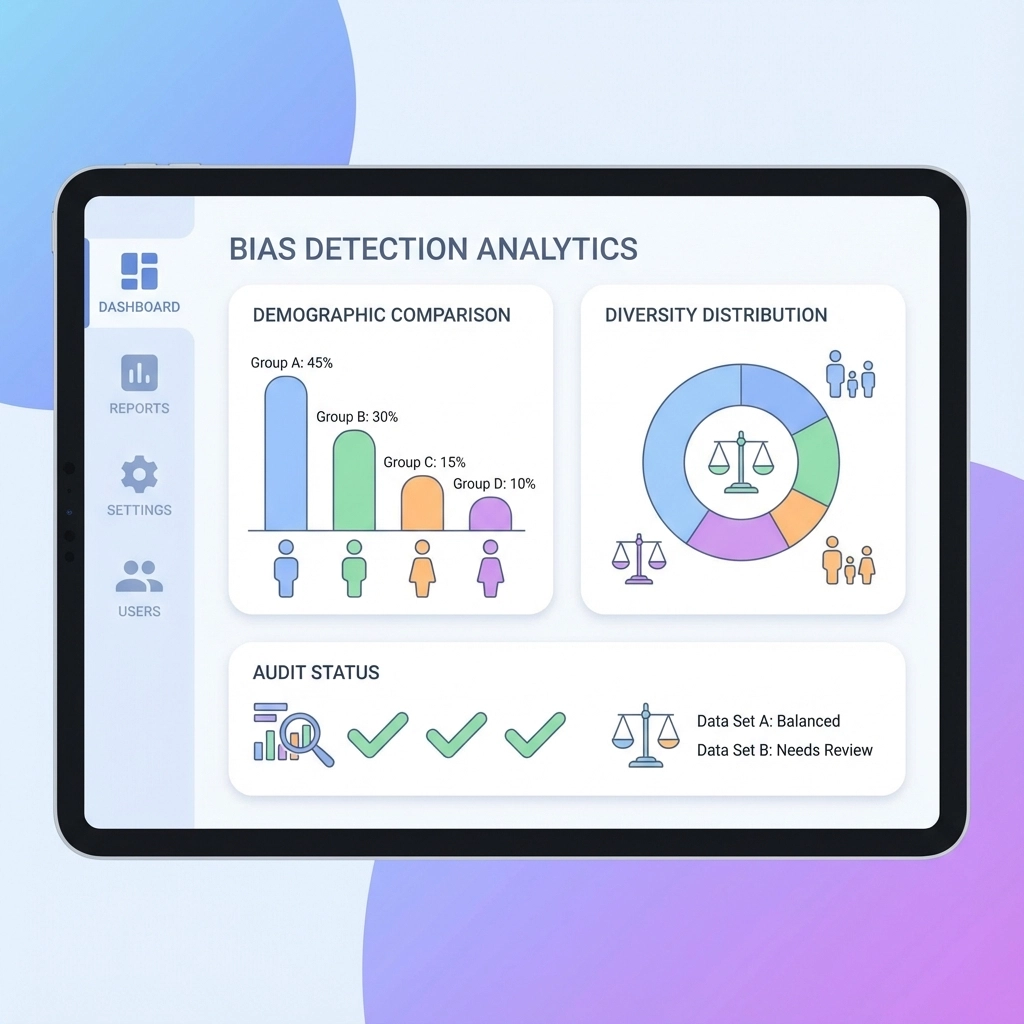
Implement Mandatory Bias Auditing
Establish formal audit protocols that examine your AI systems for discriminatory patterns across protected characteristics:
Quarterly Review Requirements:
Analyze hiring outcomes by gender, race, age, and disability status
Compare AI recommendations against human decisions
Document any statistical disparities exceeding 4:5 ratio (per EEOC guidelines)
Test with diverse candidate profiles to identify edge cases
Sample Audit Framework: "All AI systems used in candidate evaluation must undergo quarterly bias audits examining selection rates across protected classes. Any system showing adverse impact exceeding legal thresholds will be immediately suspended pending remediation."
Require Human-in-the-Loop Decision Making
No AI system should make autonomous hiring decisions. Establish clear human oversight protocols:
AI-Assisted Recommendations: AI provides candidate rankings with explanations
Human Final Authority: Trained recruiters make ultimate selection decisions
Decision Documentation: Record both AI input and human rationale
Override Tracking: Monitor when humans reject AI recommendations
Transparency Requirements: Building Candidate Trust
Candidate Disclosure Standards
Develop clear communication protocols for AI use in your hiring process:
Required Disclosures:
Which stages involve AI analysis (application screening, interview evaluation)
Types of data being processed (resume content, video analysis, assessment scores)
How candidates can request human review of AI decisions
Contact information for AI-related inquiries or concerns
Sample Candidate Notice: "This position uses AI technology to assist in initial candidate screening. AI analysis supplements but does not replace human judgment in hiring decisions. You may request human review of any AI-assisted evaluation by contacting [email]. For more information about our AI hiring practices, visit [privacy policy link]."
Explainable AI Requirements
Ensure your AI vendors can provide clear explanations for their recommendations:
Request detailed model documentation from vendors
Require explanation capabilities for individual decisions
Maintain glossaries translating technical AI outputs into business terms
Establish processes for communicating AI rationale to candidates upon request
Vendor Management: Due Diligence Essentials
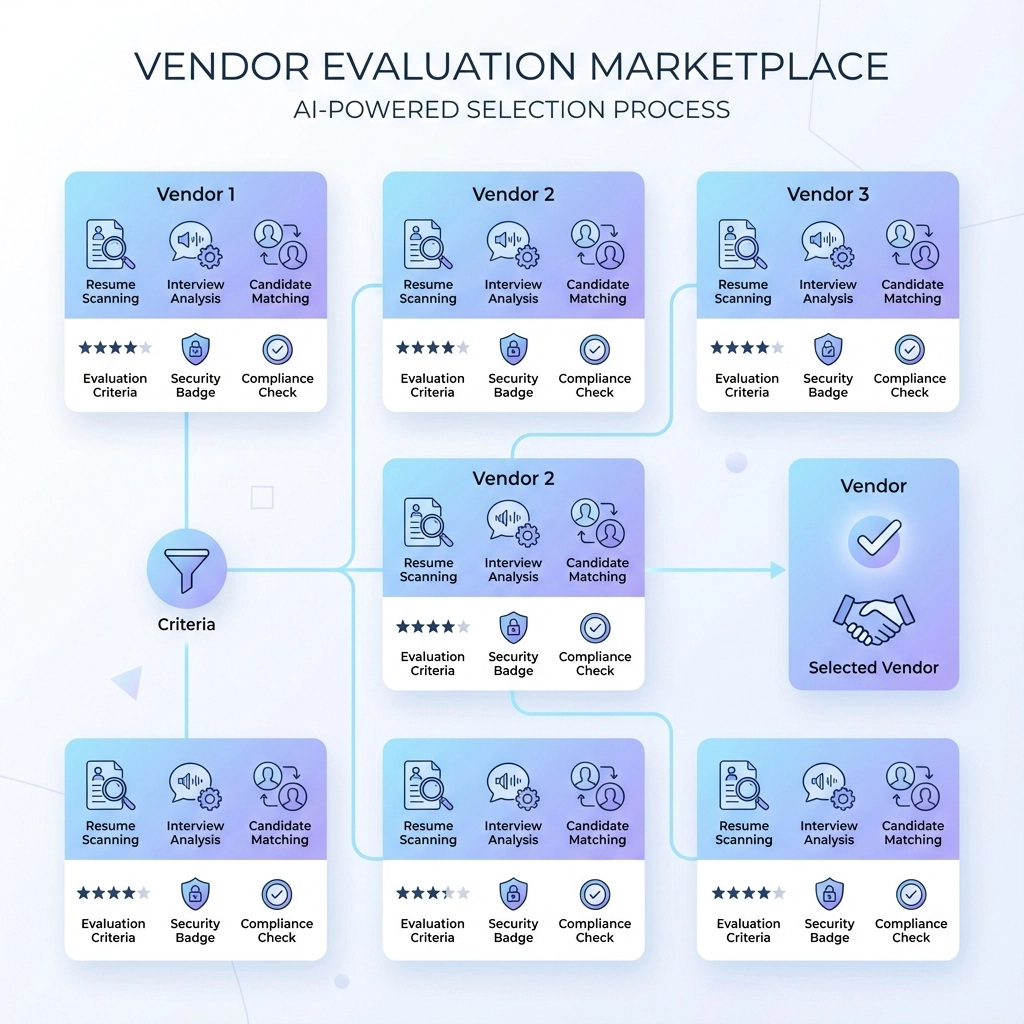
Comprehensive Vendor Evaluation
Develop rigorous assessment criteria for AI hiring tools:
Technical Requirements:
Bias testing methodology and results
Model training data diversity and representativeness
Ongoing monitoring and retraining protocols
Data security and privacy safeguards
Explanation and interpretability features
Legal and Compliance:
GDPR, CCPA, and relevant privacy law compliance
Equal employment opportunity law adherence
Audit trail capabilities
Data retention and deletion policies
Liability and indemnification terms
Sample Vendor Questionnaire: "Describe your bias testing methodology. Provide statistical evidence of fair outcomes across demographic groups. Detail your model training data sources and diversity metrics. Explain how your system handles edge cases and unusual candidate profiles."
Ongoing Vendor Accountability
Establish continuous oversight mechanisms:
Quarterly vendor performance reviews
Required bias testing reports
Escalation procedures for compliance issues
Contract terms enabling immediate suspension for violations
Compliance Tracking: Staying Ahead of Regulations
Documentation Standards
Maintain comprehensive records demonstrating responsible AI practices:
Required Documentation:
AI decision logs with explanations
Bias audit results and remediation actions
Candidate complaint records and resolutions
Vendor compliance certificates and assessments
Training completion records for HR staff
Regulatory Monitoring
Stay current with evolving AI employment laws:
Subscribe to regulatory updates from key jurisdictions
Participate in industry working groups and standards development
Conduct annual compliance gap analyses
Update policies within 60 days of new regulatory requirements
Implementation Checklist: Your 90-Day Action Plan
Week 1-2: Foundation Setting
□ Inventory all current AI tools in recruitment process □ Form AI Governance Committee with defined roles □ Assess current vendor contracts for compliance gaps □ Draft initial AI governance policy framework
Week 3-6: Policy Development
□ Create comprehensive AI inventory management system □ Develop bias audit protocols and testing schedule □ Draft candidate disclosure templates and procedures □ Establish vendor evaluation criteria and questionnaires
Week 7-10: Implementation
□ Conduct initial bias audits on all AI systems □ Implement human-in-the-loop decision protocols □ Launch AI governance training for HR staff □ Update candidate-facing materials with AI disclosures
Week 11-12: Monitoring Setup
□ Establish ongoing audit and monitoring schedules □ Create compliance tracking dashboards □ Document initial baseline metrics □ Conduct first governance committee review meeting
Sample Training Module: "All HR staff involved in recruitment decisions must complete AI governance training covering bias recognition, human oversight requirements, candidate rights, and escalation procedures. Training must be renewed annually with updates for regulatory changes."
Moving Forward: Continuous Improvement
Responsible AI in hiring isn't a destination: it's an ongoing commitment to fairness, transparency, and accountability. As AI capabilities evolve and regulations strengthen, your governance framework must adapt accordingly.
Regular assessment of your AI systems, proactive engagement with evolving regulations, and consistent focus on equitable outcomes will position your organization as a leader in responsible AI adoption.
The investment in robust AI governance pays dividends beyond compliance: enhanced candidate experience, reduced legal risk, improved hiring quality, and stronger employer brand reputation in an increasingly AI-aware job market.
Ready to transform your hiring process with responsible AI governance? Explore our comprehensive AI governance platform designed specifically for HR leaders navigating the complex landscape of AI compliance and ethics.
This post was created by Bob Rapp, Founder aigovops foundation 2025 all rights reserved. Join our email list at https://www.aigovopsfoundation.org/ and help build a global community doing good for humans with ai - and making the world a better place to ship production ai solutions
This post was created by Bob Rapp, Founder aigovops foundation 2025 all rights reserved. Join our email list at https://www.aigovopsfoundation.org/ and help build a global community doing good for humans with ai - and making the world a better place to ship production ai solutions
Comments