How to Build a Secure, Enterprise-Ready Autonomous Agent (Clawed Bot Blueprint)
- Bob Rapp

- 2 days ago
- 5 min read
Autonomous AI agents are transforming how enterprises operate. From automating compliance workflows to enriching CRM data, these "agentic" systems promise massive efficiency gains. But here's the problem: most AI bots are built for demos, not production.
The gap between a working prototype and a secure, enterprise-ready agent is enormous. Security teams push back. Compliance officers raise red flags. And that promising pilot? It dies in committee.
At AI Gov Ops, we believe governance and operations go hand in hand. You don't bolt security on at the end: you build it into the foundation. This blueprint, based on the Clawed Bot architecture, gives you a practical framework for shipping autonomous agents that CISOs actually approve.
Why "Secure by Design" Matters for Autonomous Agents
Traditional software has predictable inputs and outputs. Autonomous agents don't. They make decisions, call APIs, access sensitive data, and sometimes surprise you with their behavior.
That unpredictability creates risk. Non-compliant AI implementations now incur average penalties of $2.4 million per incident. Beyond fines, a single data leak can destroy customer trust overnight.
The solution isn't to avoid AI agents: it's to govern them properly from day one.
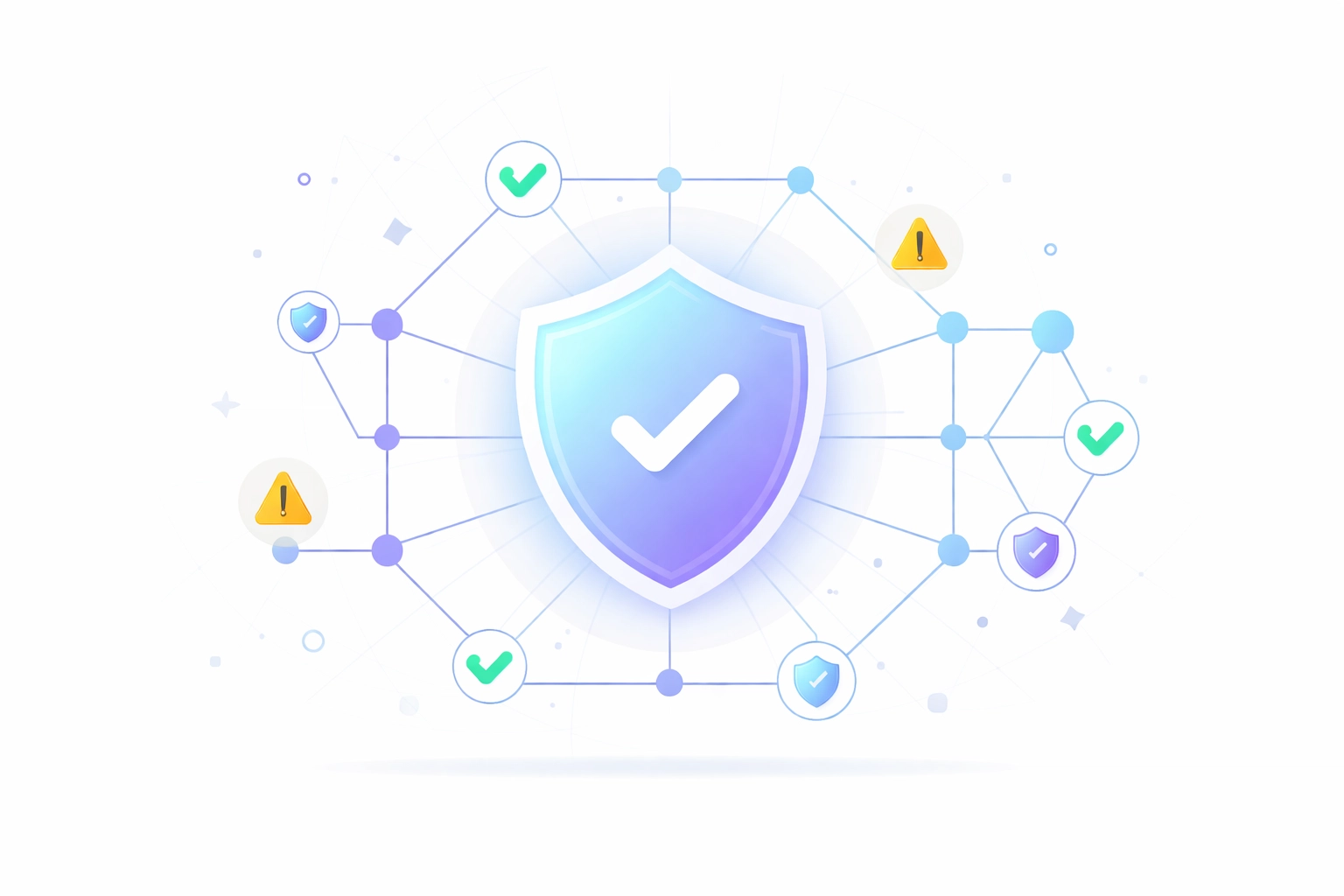
The 6-Layer Security Framework
Think of enterprise agent security as defense in depth. No single layer stops everything, but together they create a resilient system. Here's how Clawed Bot approaches it:
Layer 1: API Key Vaulting
Hardcoded API keys are the number one security mistake in AI projects. Once exposed, attackers can impersonate your agent, access your data, and run up massive bills.
Best practices:
Store all credentials in dedicated secret managers (HashiCorp Vault, Azure Key Vault, AWS Secrets Manager)
Implement automatic rotation cycles using cryptographically secure randomness
Use certificate-based authentication or hardware security modules instead of static keys
Establish immediate revocation workflows for suspected compromises
Layer 2: Adaptive Rate Limiting
Autonomous agents can run away. A poorly designed loop can hammer an API thousands of times per minute, crashing systems and burning through budgets.
Best practices:
Set request limits per agent, per endpoint, and per time window
Implement circuit breakers that pause agent activity when thresholds are exceeded
Route all agent traffic through an API gateway with built-in rate limiting
Monitor for anomalous request patterns in real time
Layer 3: Permission Scoping and RBAC
The principle of least privilege is non-negotiable. Your agent should only access what it absolutely needs: nothing more.
Best practices:
Deploy attribute-based access control (ABAC) that evaluates requests in real time
Grant time-bound, revocable credentials that expire automatically
Use policy decision points (PDPs) that incorporate conditions like data classification and business hours
Conduct continuous access reviews to eliminate privilege creep
Layer 4: Execution Sandboxing
When agents execute code or call external tools, they represent the highest-risk execution surface. Isolation prevents a compromised agent from accessing the broader system.
Best practices:
Run agent processes in containerized, sandboxed environments
Define clear network boundaries with explicit allow-lists
Require explicit permission checks before any tool executes
Make tools available only when the specific task requires them

Layer 5: Schema-Strict Input Validation
Prompt injection attacks are real. Malicious inputs can trick agents into revealing sensitive data or executing unauthorized actions.
Best practices:
Validate all inputs against strict schemas before processing
Implement prompt filtering to detect and block injection attempts
Sanitize user-provided content before passing it to the agent
Test resistance to injection attacks through regular red team exercises
Layer 6: Output Filtering and PII Redaction
Even well-behaved agents can accidentally leak sensitive information. The final layer catches what slips through.
Best practices:
Deploy inline data loss prevention (DLP) on all agent outputs
Implement pattern matching to detect and redact PII automatically
Block responses that contain sensitive data patterns (SSNs, credit card numbers, health records)
Log all outputs for audit purposes without storing the redacted content
Microservices Architecture for Scale
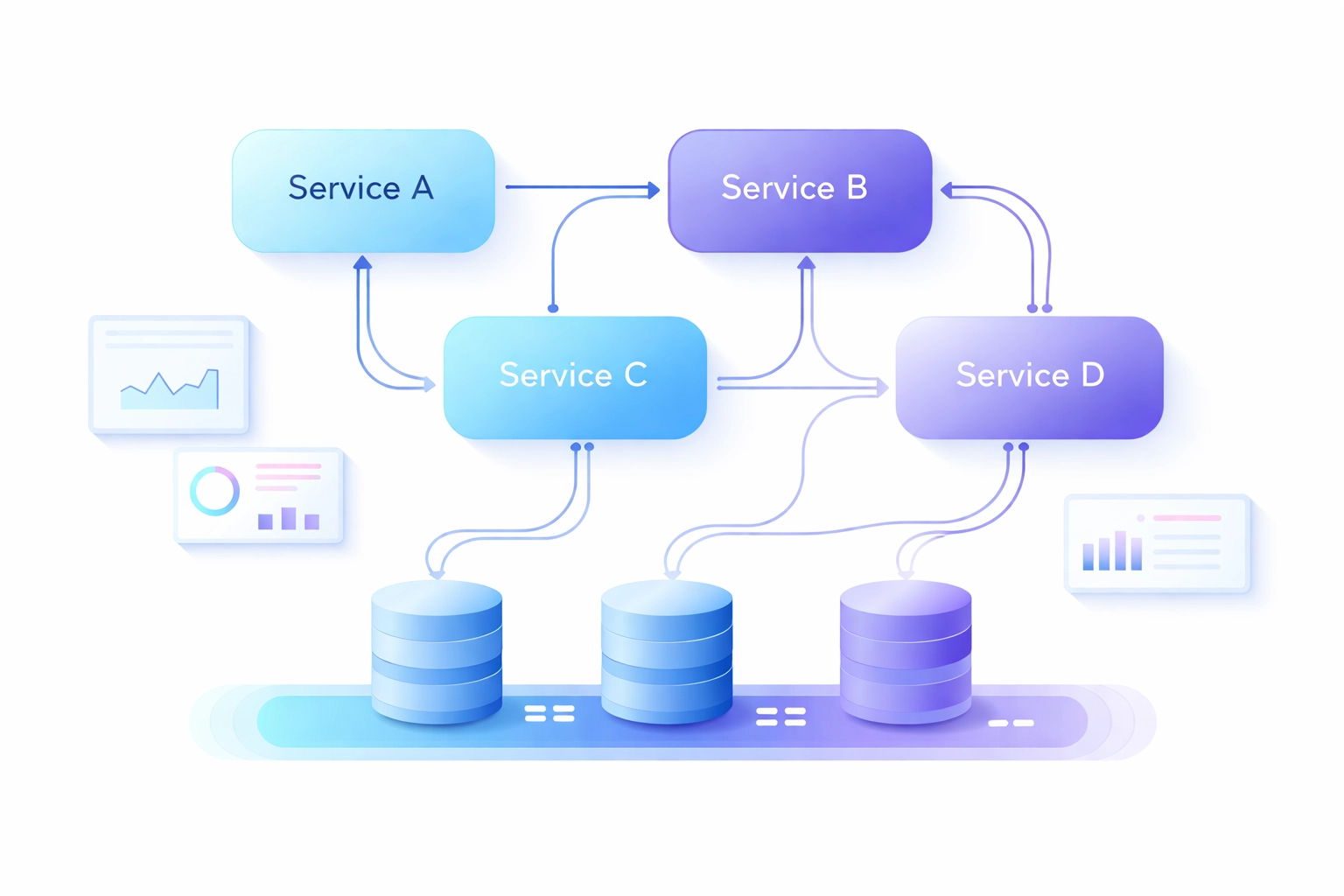
A monolithic agent works fine for prototypes. For production, you need a microservices architecture that scales horizontally and fails gracefully.
Core Services
Agent Runtime: The execution engine that processes requests and coordinates workflows. Design it to be stateless so you can spin up multiple instances under load.
Policy Engine: Centralizes all governance rules. Every action the agent takes gets evaluated against this engine in real time.
Skill Manager: Manages the capabilities (tools, integrations, functions) available to the agent. Controls what the agent can do and when.
Integration Hub: Handles connections to external systems (CRMs, ERPs, databases) with standardized authentication and error handling.
Data Layer
PostgreSQL: Persistent storage for agent configurations, audit logs, and transaction records
Redis: In-memory caching for session state and high-speed lookups
Kafka: Event streaming for high-throughput, asynchronous processing
HashiCorp Vault: Centralized secrets management with automatic rotation
Observability Stack
If you can't see it, you can't govern it.
Prometheus: Metrics collection for performance monitoring and alerting
Jaeger: Distributed tracing to follow requests across microservices
Elastic (ELK): Log aggregation and search for debugging and compliance audits
Zero-Trust Controls
Treat every autonomous agent as inherently untrusted. That's the zero-trust mindset, and it's essential for enterprise deployments.
mTLS Everywhere
Mutual TLS ensures both the client and server authenticate each other. Every service-to-service call within your agent architecture should use mTLS.
OAuth 2.0 Integration
Integrate agents with your enterprise identity provider using OAuth 2.0 or OIDC. This gives you centralized control over who (and what) can authenticate.
Comprehensive Audit Logs
Preserve everything: prompts, responses, decision trails, tool invocations, and data access. When an incident happens, these logs are your lifeline for understanding what went wrong.
Deployment Models
Different organizations have different requirements. Clawed Bot supports three deployment models:
Model | Best For | Trade-offs |
On-Premises | Regulated industries, data sovereignty requirements | Higher infrastructure cost, more operational burden |
Cloud Native | Scalability, rapid deployment | Requires strong cloud security posture |
Managed | Teams without dedicated DevOps | Less control, vendor dependency |
Choose based on your compliance requirements, technical capabilities, and risk tolerance.
Compliance Readiness Checklist
Building for compliance from day one accelerates your path to production. Here's what to address:
HIPAA (Healthcare):
Implement access controls and audit trails for PHI
Encrypt data at rest and in transit
Establish Business Associate Agreements with all vendors
GDPR (EU Data Protection):
Enable data subject access and deletion requests
Document lawful basis for processing
Implement data minimization in agent workflows
SOC 2 (Service Organizations):
Establish security policies and procedures
Implement continuous monitoring and alerting
Maintain evidence of control effectiveness
FedRAMP (US Government):
Deploy within authorized cloud environments
Implement required security controls
Maintain continuous monitoring program
Pre-Production Security Checklist
Before you ship, validate:
All API keys stored in vault with automatic rotation
Rate limiting configured and tested under load
RBAC policies reviewed and minimized
Execution sandboxing verified through isolation testing
Input validation tested against injection attacks
Output filtering confirmed for PII patterns
Audit logging capturing all agent activity
Incident response procedures documented and rehearsed
Shape the Future of Responsible AI
Building secure, enterprise-ready autonomous agents isn't just about avoiding risk: it's about unlocking value. When you govern AI properly, you move faster because you've already addressed the concerns that stall most projects.
The Clawed Bot blueprint gives you a foundation. The AI Gov Ops community gives you the support to implement it.
Ready to build agents that ship to production? Join the conversation and help shape how organizations deploy responsible AI at scale.
This post was created by Bob Rapp, Founder aigovops foundation 2025 all rights reserved. Join our email list at https://www.aigovopsfoundation.org/ and help build a global community doing good for humans with ai - and making the world a better place to ship production ai solutions
Comments