The Agentic PRD: A 6-Layer Security Blueprint for Enterprise AI Bots
- Bob Rapp

- 2 days ago
- 5 min read
Why "Cool AI" Isn't Enough for the Enterprise
Everyone's building AI agents right now. The problem? Most of them are ticking time bombs from a security and governance perspective.
Autonomous agents like "Clawed Bot" represent a massive leap forward in what AI can accomplish. They can reason, plan, execute multi-step workflows, and interact with external systems. But that same autonomy creates attack surfaces that traditional software security models weren't designed to handle.
If you're serious about deploying agentic AI in production, especially in regulated industries, you need more than a clever prompt and an API key. You need a Product Requirements Document (PRD) that treats security as a first-class citizen from day one.
This post breaks down a 6-layer security framework for building enterprise-grade AI bots, along with the architecture patterns and business value that make the investment worthwhile. Consider this your blueprint for shipping AI that CISOs actually approve.
The 6-Layer Security Framework
Think of security for agentic AI like an onion, multiple layers working together so that if one fails, others catch the threat. Here's how to build defense-in-depth for autonomous agents.

Layer 1: API Key Management (Secrets Vaulting)
The problem: Hardcoded API keys are the number one cause of AI-related security incidents. One leaked key in a GitHub repo can expose your entire infrastructure.
The solution: Use a dedicated secrets management system like HashiCorp Vault or AWS Secrets Manager. Keys should be:
Rotated automatically on a schedule
Scoped to minimum necessary permissions
Never stored in code, environment variables, or logs
For Clawed Bot implementations, this means the agent never "sees" the raw API key, it requests access through a secure broker that handles authentication on its behalf.
Layer 2: Adaptive Rate Limiting
The problem: Agentic AI can enter runaway loops, hammering APIs and burning through resources (and budgets) in minutes.
The solution: Implement intelligent rate limiting that adapts based on:
Request patterns (sudden spikes trigger throttling)
Cost thresholds (hard stops when spending exceeds limits)
Time-based windows (different limits for peak vs. off-peak)
This isn't just about protecting external APIs, it's about preventing your own agent from DDoS-ing your internal systems during an unexpected feedback loop.
Layer 3: Dynamic Permission Scoping (RBAC)
The problem: Most AI agents are deployed with overly broad permissions because "it's easier." This violates the principle of least privilege and creates massive blast radius when something goes wrong.
The solution: Implement Role-Based Access Control (RBAC) that's:
Dynamic: Permissions adjust based on the task context
Granular: Read vs. write vs. execute permissions for each resource
Auditable: Every permission grant and use is logged
For enterprise Clawed Bot deployments, this means the agent operating in "research mode" has different permissions than when it's in "execution mode." The system enforces boundaries automatically.
Layer 4: Execution Sandboxing
The problem: If an agent can execute code or interact with systems, a compromised agent can do anything those systems allow.
The solution: Run agent processes in isolated containers with:
No network access except explicitly allowlisted endpoints
Read-only file systems where possible
Resource limits (CPU, memory, execution time)
No access to host system credentials or processes
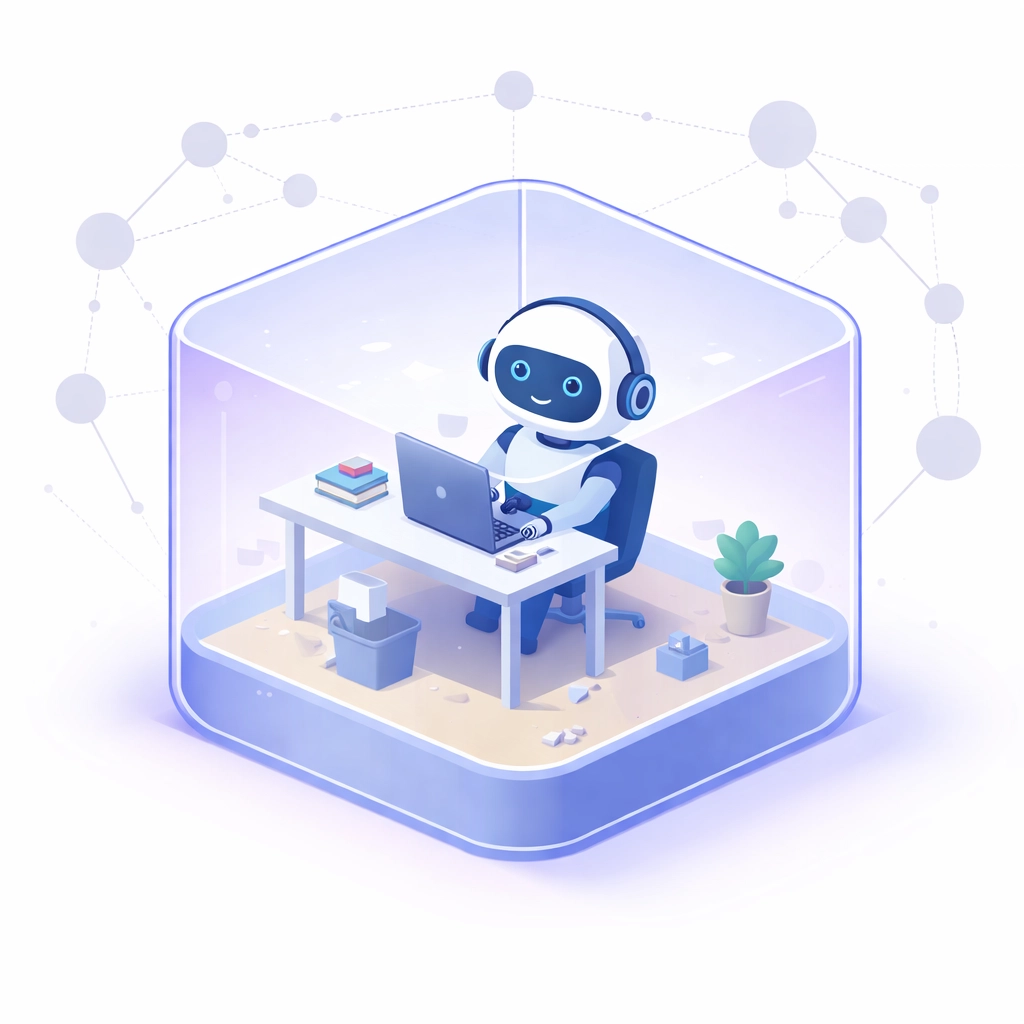
Think of it as giving your AI a playground where it can't hurt anything outside the sandbox walls, no matter what instructions it receives.
Layer 5: Schema-Strict Input Validation
The problem: Prompt injection and malformed inputs can hijack agent behavior, causing it to ignore instructions or leak sensitive data.
The solution: Validate every input against strict schemas before it reaches the agent:
Define expected input formats (JSON schemas, regex patterns)
Reject anything that doesn't conform, don't try to "fix" it
Log rejected inputs for security analysis
Implement content filtering for known injection patterns
This layer is your front door. If bad data can't get in, it can't cause damage downstream.
Layer 6: PII Output Filtering
The problem: Even well-behaved agents can accidentally include sensitive data in their outputs, customer names, account numbers, health information.
The solution: Apply output filtering that:
Scans all agent responses before delivery
Redacts detected PII patterns automatically
Flags outputs that contain potential sensitive data for human review
Maintains compliance with HIPAA, GDPR, and SOC 2 requirements
This is your last line of defense. Even if something slips through the other layers, PII filtering ensures sensitive data doesn't leave the system.
Building the Architecture: Core Services, Data Layer, and Observability
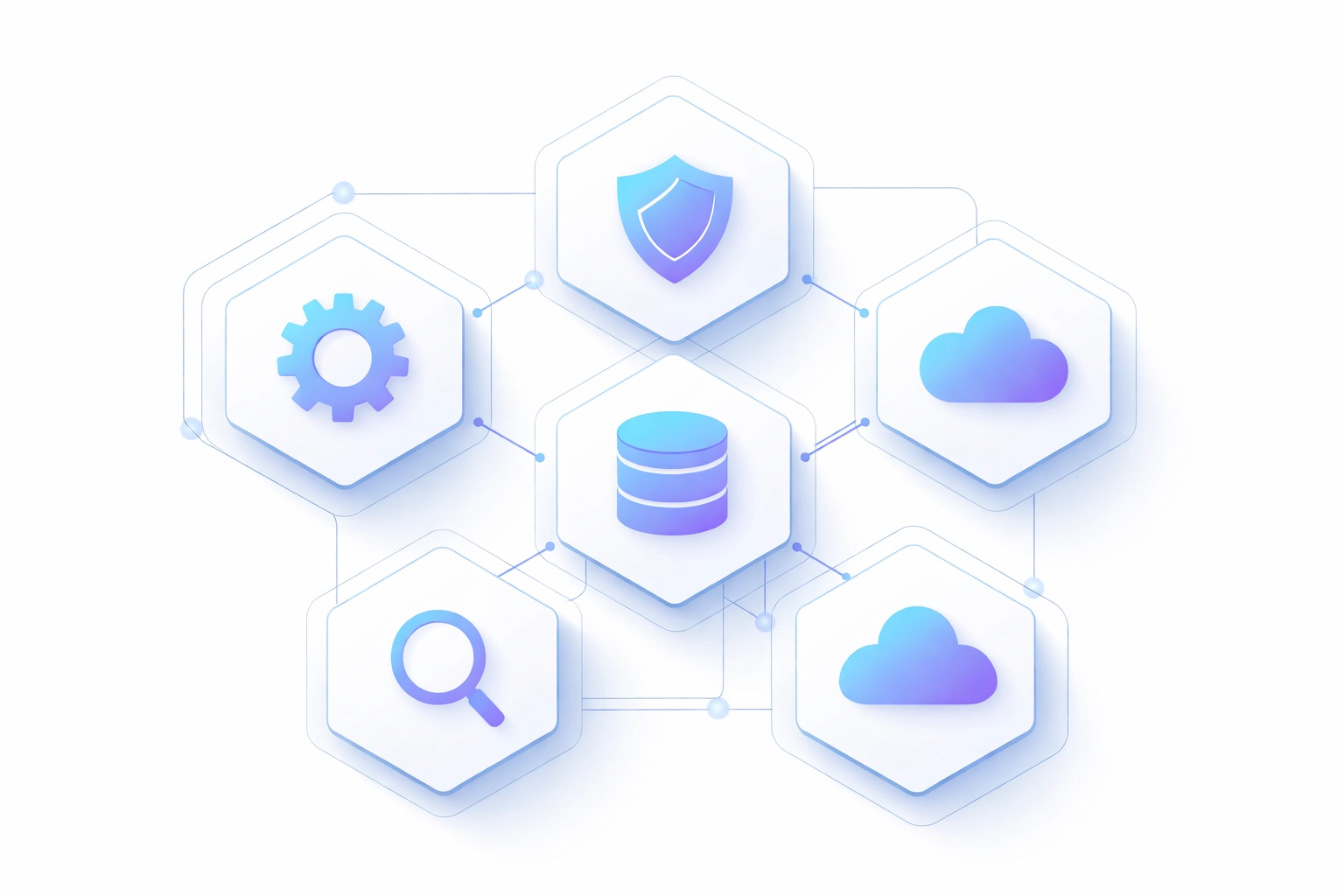
A 6-layer security framework is only as good as the architecture it runs on. Here's how to build the infrastructure that makes enterprise Clawed Bot deployments possible.
Core Services (Microservices Architecture)
Break the agent into discrete, independently deployable services:
Orchestration Service: Manages agent workflows and task sequencing
Authentication Service: Handles identity, tokens, and session management
Tool Registry: Controls which external tools/APIs the agent can access
Execution Engine: Runs agent code in sandboxed environments
This separation means you can update, scale, and secure each component independently. A vulnerability in one service doesn't compromise the entire system.
Data Layer (High-Throughput and Secure)
Your data infrastructure needs to handle the volume and sensitivity of agentic workloads:
Apache Kafka: For high-throughput event streaming and audit logging
HashiCorp Vault: For secrets management (as discussed in Layer 1)
PostgreSQL with encryption: For persistent storage with at-rest encryption
Redis: For session caching with automatic expiration
Observability (If You Can't See It, You Can't Govern It)
Agentic AI requires next-level observability:
Distributed Tracing (Jaeger): Follow requests across microservices
Metrics (Prometheus): Monitor performance, resource usage, and anomalies
Centralized Logging (ELK Stack): Aggregate logs for security analysis and compliance audits
Alerting: Real-time notifications when security thresholds are breached
The goal is complete visibility into what your agent is doing, why, and whether it's behaving within expected parameters.
The Business Case: ROI and Value Phases
Security isn't just a cost center, it's a competitive advantage. Here's how a properly governed Clawed Bot deployment pays for itself.
Phase 1: Foundation (Months 1-3)
Deploy core security framework
Establish governance policies and RBAC
Expected efficiency gain: 20-40%
Payback period: 3-6 months
Phase 2: Expansion (Months 4-6)
Scale to additional use cases (audit automation, CRM enrichment, document processing)
Integrate with existing enterprise systems
Expected efficiency gain: 40-60%
Payback period: 1-3 months for new workflows
Phase 3: Optimization (Months 7-12)
Advanced analytics and continuous improvement
Cross-departmental deployment
Expected efficiency gain: 60-80%
Cumulative ROI: 200-400% in year one
The key insight: organizations that build security in from the start avoid the "compliance wall" that kills 80% of enterprise AI projects. You ship faster because you're not retrofitting governance after the fact.
Your Clawed Bot Security Checklist
Ready to build your own enterprise-grade agentic AI? Start here:
Implement secrets vaulting, no hardcoded API keys
Configure adaptive rate limiting with cost thresholds
Design RBAC with task-specific permission scoping
Deploy execution sandboxing for all agent processes
Build schema-strict input validation at every entry point
Enable PII output filtering before any external delivery
Establish distributed tracing and centralized logging
Create runbooks for security incident response
Governing AI isn't about saying "no." It's about building the rails so you can confidently say "go."
This post was created by Bob Rapp, Founder aigovops foundation 2025 all rights reserved. Join our email list at https://www.aigovopsfoundation.org/ and help build a global community doing good for humans with ai - and making the world a better place to ship production ai solutions
Comments